

When a loved one begins to struggle with daily tasks, finding the right support can feel overwhelming. You want them to be safe, but you also want them to maintain their independence and dignity. Moving into a residential facility is not the only option available. In fact, many people in the UK are choosing to receive professional support right in the comfort of their own homes. This approach allows individuals to stay in familiar surroundings while getting the exact level of help they need.
What is Domiciliary Care?

If you are exploring options for the first time, you might encounter many unfamiliar medical or professional terms. The word “domiciliary” simply relates to a person’s home. Therefore, the basic domiciliary meaning refers to services provided directly at a person’s home.
The True Meaning of Domiciliary Care
To understand the meaning of ‘domiciliary ,’ you have to look at the service’s primary goal. It is a range of supportive services provided to individuals in their own homes. This type of assistance is designed for people who need extra help with day-to-day activities due to ageing, illness, disability, or recovery from surgery.
Unlike a residential nursing facility, where patients move into a clinical environment, a care home setup means the professionals come to you. The core meaning centres on preserving a person’s routine, comfort, and independence. It allows people to sleep in their own beds, stay close to their pets, and remain active in their local communities.
Domiciliary Definition in Everyday Life
The formal domiciliary definition is “relating to a person’s home or taking place in a person’s home.” In practical terms, this means that every aspect of the support plan adapts to the household’s physical layout and personal rules. When someone asks, “What does domiciliary mean?”, the simplest answer is that it means “at home.”
This is why you often hear people refer to these services simply as ‘dom care’ or ‘home care’. Regardless of the exact phrasing, the dom care meaning remains the same. It is all about bringing professional, compassionate support directly to the doorstep.
Exploring Domiciliary Care Services
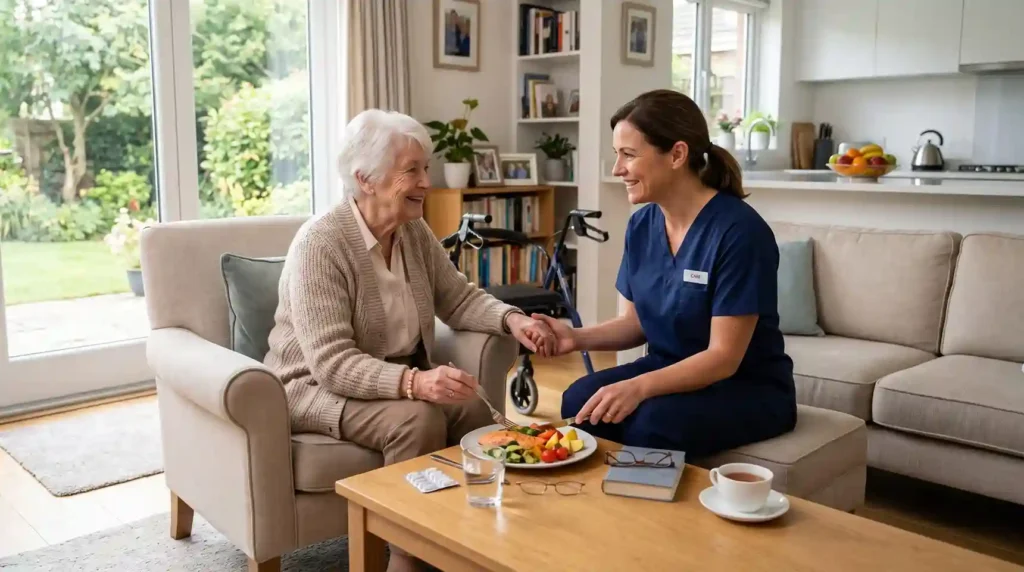
Every person has highly unique needs, which means that a home assistant cannot be a rigid, one-size-fits-all solution. Domiciliary services cover a massive spectrum of activities. Some people only need a friendly visitor to check in once a week, while others require intensive, round-the-clock medical and personal support.
Examples of Home Support
To fully grasp what domiciliary work is, it helps to look at the specific tasks a professional might handle on a typical day. A comprehensive support plan from a trusted provider typically includes several categories of assistance.
Here are some common examples:
- Companionship: Simply sitting and talking, playing games, or going for a walk together to prevent loneliness and isolation.
- Domestic Tasks: Helping with light housekeeping, washing dishes, doing laundry, and taking out the trash.
- Meal Preparation: Planning nutritious meals, grocery shopping, cooking, and ensuring the person is eating properly and staying hydrated.
- Mobility Support: Assisting individuals with getting out of bed, moving around the house safely, and using mobility aids like walkers or wheelchairs.
- Medication Management: Reminding the individual to take their prescribed medications at the correct times and organising pill boxes.
Personal Care and Daily Living Assistance
One of the most vital aspects of these services involves personal hygiene and physical well-being. Personal support requires a high level of trust, respect, and compassion. Many people feel vulnerable when they can no longer bathe or dress themselves independently.
A compassionate carer domiciliary professional will assist with:
- Bathing, showering, and basic grooming.
- Dressing and choosing appropriate clothing for the weather.
- Toileting and managing incontinence with absolute dignity.
- Oral hygiene and dental routines.
By handling these sensitive tasks with grace, carers help individuals maintain their confidence and self-esteem.
The Role of a Care Professional

The success of any home carer arrangement relies entirely on the dedication and skill of the professionals providing the support. But what is a worker, and what exactly do they do on a daily basis?
What is a Domiciliary Carer?
A carer is a trained professional who visits clients in their own homes to provide practical, physical, and emotional support. When defining a carer, think of them as the bridge that connects a vulnerable person to a safe, independent life.
When someone asks, “What is a domiciliary carer?”, they are usually curious about the qualifications and the attitude required for the job. These professionals must possess immense patience, excellent communication skills, and a genuine desire to help others. They are not just completing household chores. They are building meaningful relationships, monitoring health changes, and providing peace of mind to anxious family members.
Key Duties of a Domiciliary Carer
The job description for a carer is extensive and highly dynamic. A typical day is rarely predictable because clients’ needs can change from one visit to the next. The duties of a domiciliary care worker generally include the following responsibilities:
- Executing the Carer Plan: Following the specific instructions laid out in the client’s customised carer strategy.
- Health Monitoring: Keeping a watchful eye on the client’s physical and mental condition and reporting any concerning changes to family members or medical supervisors.
- Emotional Support: Acting as a steady, comforting presence for clients who may be struggling with anxiety, dementia, or depression.
- Emergency Response: Knowing exactly how to react in a crisis, whether that means performing basic first aid or contacting emergency services immediately.
- Detailed Record Keeping: Logging the details of every visit, including what the client ate, what medications were taken, and any notable mood changes.
If you are interested in learning more about the specific training these professionals undergo, you can explore the resources provided by Serene Soul Care to see the high standards required in the UK carer sector.
Why Choose In-Home Support?

Making decisions about a loved one’s future is incredibly stressful. You might find yourself comparing the benefits of residential facilities with those of domiciliary home care services. Understanding the core benefits of staying at home can make this difficult decision much clearer.
Independence and Comfort
The most significant advantage of home care is the preservation of independence. Moving to a new facility often forces an individual to abandon their lifelong routines. They must adapt to new meal times, new rules, and unfamiliar faces. For someone already dealing with cognitive decline or physical frailty, this drastic change can cause severe distress and confusion.
Staying at home means the individual remains the boss of their own environment. They choose when to wake up, what to watch on television, and when to entertain guests. The familiarity of their own living room, the memories attached to their photographs, and the comfort of their own furniture all contribute to better mental health and overall well-being.
Tailored Care Plans by Serene Soul Care
In a residential facility, staff members must split their attention among dozens of residents. This often means that care becomes highly generalised. In contrast, a home assistant is entirely bespoke.
Organisations specialising in the domiciliary business understand that no two clients are identical. Providers take the time to conduct thorough initial assessments. They sit down with the family and the client to discuss medical history, personal preferences, and lifestyle goals.
This detailed assessment results in a tailored carer plan. The plan is highly flexible. If a client recovers from a surgery and needs less help, the hours can be reduced. If a progressive condition worsens, the support can be quickly increased to ensure safety. This adaptable approach is the true definition of domiciliary support at its finest.
Navigating the Domiciliary Care Business in the UK

The demand for high-quality home support is growing rapidly across the UK. As the population ages, more families are searching for reliable professionals to help their loved ones. However, navigating the business can be tricky if you do not know what to look for.
Finding Domiciliary Home Care Services
When you begin your search for care services, it is vital to look for agencies with solid reputations and transparent practices.
Here are important pointers to keep in mind when evaluating a service:
- Regulatory Compliance: Ensure the agency is fully registered and inspected by the relevant UK health and social-care regulators.
- Staff Training: Ask detailed questions about how the agency screens, trains, and monitors their carers.
- Flexibility: Check if they offer a wide range of services, from short weekly visits to intensive live-in support.
- Communication: Choose a provider that prioritises open, honest communication with family members. You should always know exactly who is visiting your loved one and when.
- Client Reviews: Look for testimonials and feedback from other local families who have used their services.
Finding the right match might take some time, but partnering with a compassionate and professional organisation is worth the effort. It brings stability to the client and immense relief to the family.
Conclusion
Understanding what domiciliary care is is the first step toward making empowered, confident decisions for your family’s future. This support goes far beyond simply helping someone get dressed or cook a meal. It is about preserving human dignity, fostering joy, and allowing individuals to age gracefully in the place they love most.
Whether you refer to it as domicillary, domicilliary, or domiciliary services, the goal is entirely the same. It is about bringing compassionate, skilled assistance directly into the home. Organisations like Serene Soul Care are dedicated to providing these tailored, high-quality services across the UK. They ensure that every individual receives the exact support they need to maintain their independence and enjoy their daily lives.
If you or a loved one is starting to find daily tasks challenging, do not wait until a crisis occurs. Reach out to a professional carer provider today to discuss your options, arrange an assessment, and start building a customised plan that prioritises safety, comfort, and happiness.
Frequently Asked Questions (FAQs)
What is the simple meaning of domiciliary?
The simple definition of domiciliary is professional and support provided to an individual in their own home, rather than in a hospital or a residential nursing facility.
What is a domiciliary carer?
A domiciliary carer refers to a trained professional who travels to clients’ homes to assist with daily living activities, personal hygiene, medication management, and companionship.
What is the difference between residential care and domiciliary care?
Residential care requires the individual to leave their home and move into a facility where staff are available 24/7. It allows the person to remain in their own house while professionals visit them at scheduled times to provide necessary support.
What are the main duties of a domiciliary care worker?
The main duties of a worker include helping with personal support (bathing and dressing), performing light domestic chores, preparing meals, reminding clients to take medications, and providing vital social interaction and companionship.
How much does a domiciliary service cost?
The cost of support varies widely depending on the level of support required, the number of visits per week, and the specific location in the UK. Because care plans are customised, providers will usually offer a personalised quote after conducting an initial needs assessment.
Can dom-care help people with dementia?
Yes, absolutely. Many domiciliary carers receive specialised training in dementia care. They can provide a safe, structured routine that helps reduce confusion and anxiety, allowing individuals with dementia to stay in their familiar home environment for as long as safely possible.
How do I know if my loved one needs a carer service?
Signs that it might be time to consider home support include noticeable weight loss, poor personal hygiene, an untidy or unsafe house, frequent falls, missed medications, or signs of severe loneliness and depression.
Are care plans flexible?
Yes. A reputable provider understands that needs change over time. If a client’s health improves or declines, the care plan can be adjusted immediately to reflect those changes, ensuring they always receive the right amount of help.
How do I get started with setting up care?
The best way to start is by contacting a professional organisation to request an initial consultation. They will visit the home, speak with the family and the individual, assess the environment, and recommend a tailored strategy moving forward.