
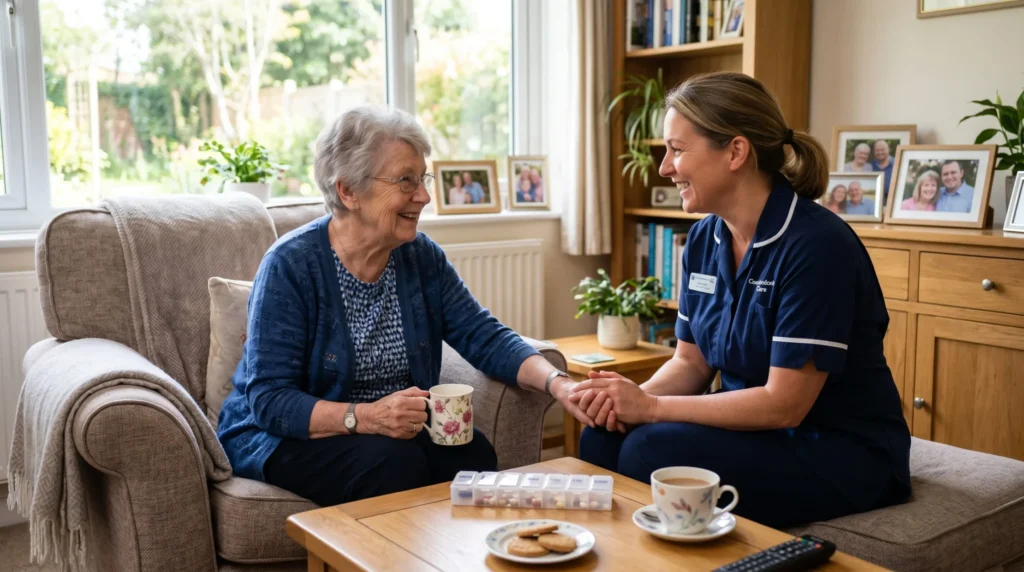
Have you noticed an older family member struggling with their daily routines? You might wonder how to help them stay safe without moving them into a residential nursing home. Many families face this exact challenge. They want their loved ones to keep their independence but know they require constant support.
This guide explains everything you need to know about arranging support at home. We will explore the true live-in care meaning, outline the daily responsibilities of professionals, and help you decide if this option suits your family. By the end of this article, you will have a clear picture of how tailored home support creates a safer, happier environment for vulnerable adults.
What is live-in care?
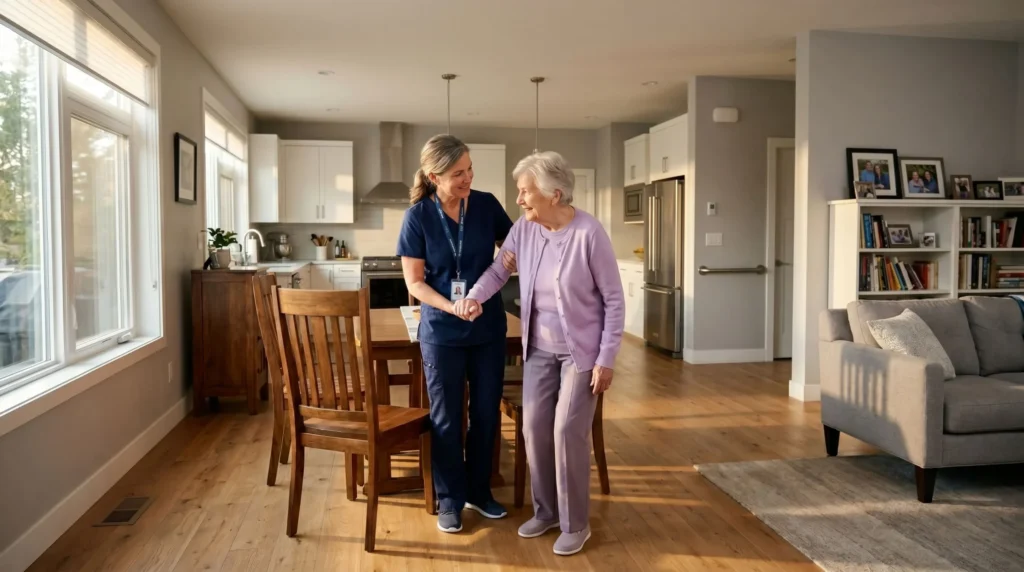
People often ask us, “What is live-in care?” The concept is very straightforward. A trained professional moves into the home of the person who needs assistance. This setup ensures that help is always available, day or night. But what does live-in care mean in practical terms? It means your loved one receives one-on-one attention in the comfort of their own familiar surroundings.
The meaning of living in care revolves around promoting independence. Instead of adjusting to the strict schedule of a residential facility, the person in care keeps their normal daily routine. They eat when they want, sleep when they want, and enjoy their favourite hobbies.
If you are wondering “how does live-in care work?”, the process begins with a detailed assessment. A care provider visits the home to understand the exact needs of the individual. They then match the person with a compatible carer. The professional needs a private bedroom and basic amenities, but otherwise, they integrate smoothly into the household. For families exploring options through Serene Soul Care, this matching process is highly personalised and completely focused on the individual.
Exploring the live in carer meaning

When families start their research, they frequently search for terms like “what is a live in carer?” or “what is a live-in carer?” A carer is a dedicated professional who provides practical, physical, and emotional support. They are sometimes called live-in caretakers or care assistants.
Some people use the term livein carer or live-in carer. Regardless of the spelling, the role remains the same. These professionals handle everything from personal hygiene to the management of complex medical conditions. They offer companionship, which drastically reduces feelings of loneliness and isolation.
What is C.A.R.E?
You might also wonder what is c.a.r.e in the context of professional health support? The letters often stand for Compassion, Accountability, Respect, and Excellence. These four pillars form the foundation of high-quality live-in care services. A reliable live in caregiver always demonstrates these traits while supporting your family member.
The Role of a Live in Carer
Understanding the exact responsibilities of a professional helps families set realistic expectations. So, what does a live in carer do on a typical day?
The live-in carer duties vary greatly depending on the specific needs of the individual. Some people only need mild companionship and help with household chores. Others require specialist live-in care for conditions like dementia, Parkinson’s disease, or physical disabilities.
Daily live in carer duties.
Here is a list of common tasks a live in home caregiver handles every day:
- Personal Hygiene: Assisting with bathing, showering, dressing, and toileting.
- Medication Management: Reminding the individual to take their pills at the correct times and organising prescriptions.
- Meal Preparation: Planning and cooking nutritious meals that meet specific dietary requirements.
- Mobility Support: Helping the person move safely around the house to prevent dangerous falls.
- Housekeeping: Managing light chores like laundry, vacuuming, and keeping the home tidy.
- Companionship: Sharing conversations, playing games, and watching television together.
- Pet Care: Feeding and walking beloved family pets.
- Running Errands: Doing the grocery shopping or picking up medication from the local pharmacy.
- Appointments: Accompanying the individual to doctor visits or social events.
These comprehensive tasks show how live in caring goes far beyond basic medical support. It touches every single aspect of a person’s daily life.
The Benefits of Live in Care Services

Choosing the right type of support is a huge decision. Many families weigh the differences between residential homes and live-in services. Keeping a loved one at home provides several unique advantages.
Staying in a Familiar Environment
Moving to a new place causes immense stress and confusion, especially for older adults living with memory issues. Live-in care at home allows the person to stay surrounded by their favourite possessions, their pets, and their local community. Familiarity breeds comfort.
One-on-One Attention
In a residential facility, staff members divide their time between many different residents. A carer focuses entirely on one single person. This dedicated attention ensures that any changes in health or behaviour get noticed immediately.
Complete Flexibility
Living care adapts completely to the individual. If your parents want to eat breakfast at 10 AM, they can. If they want to visit the garden in the afternoon, the live-in care assistant makes it happen. This freedom greatly improves their overall quality of life.
Peace of Mind for the Family
Knowing a trained professional is present 24/7 brings massive relief to family members. You no longer have to worry about your parents falling in the night or forgetting their medication.
Who Needs Live-in Care UK?
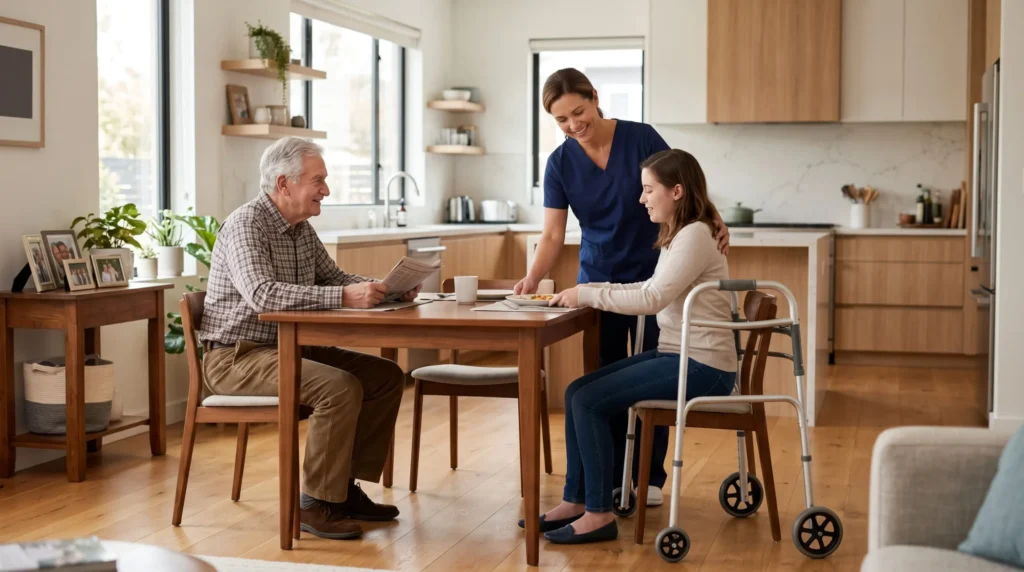
The demand for live-in care in the UK continues to grow rapidly. People are living longer, and they want to spend their later years in their own homes.
Live in care for the elderly support.
The most common request for these services involves live-in support for elderly support. As people age, they naturally lose muscle strength and mobility. Tasks that used to take five minutes suddenly take an hour. A live-in homecare professional steps in to bridge this gap, ensuring the older adult remains safe.
Supporting Younger Adults
Live in care is not just for the elderly. Many younger adults live with physical disabilities, learning difficulties, or complex health conditions. A dedicated caregiver helps them live independently, attend university, or maintain a job.
Temporary or Respite Support
Sometimes families only need temporary help. If a family member usually provides the support, they might need a break to go on holiday or recover from an illness. Live-ins can provide short-term cover to ensure the vulnerable person remains safe while their primary family member rests.
Choosing the Right Live in Care Provider

Finding the right agency requires careful research. Families searching for live-in care in England have many different options available.
When searching online, you might come across terms like Care First 24, Care in Hand Ltd, or Live in Carer Helping Hands. While these are common searches, you must evaluate every single company based on its specific merits and core values. You want an organisation that treats your family members with genuine dignity and respect.
Questions to Ask a Provider
When you interview a potential provider, use this checklist of important questions:
- How do you recruit and train your live-in carers?
- Do you conduct background checks and police screenings?
- How do you match the carers with the client?
- What happens if the primary carer gets sick or needs a holiday?
- How do you handle emergencies during the night?
- Can you provide a specialist carer for conditions like dementia?
- How do you monitor the quality of the live care provided?
A reputable company will answer all these questions confidently and clearly. They will prioritise your peace of mind above all else.
The Financial Side of Live-in Home Care

Many people assume that hiring full-time help at home is too expensive. However, when you compare the costs to a quality residential nursing home, live-in home care often proves to be highly cost-effective.
Couples, in particular, save a significant amount of money. In a residential home, you pay for two separate beds. With live in care, you pay for one single professional to support both people in their own home.
Funding options are also available to help families manage costs. You should always speak to your local council to request a carer needs assessment. They will evaluate your situation and determine if you qualify for financial assistance. Additionally, the NHS offers Continuing Healthcare funding for individuals with severe, complex medical needs.
Making the Transition to Care in Live Environments
Welcoming a stranger into your home feels daunting at first. Both the family and the live-in carer need time to adjust to the new routine.
Here are three simple tips to make the transition smoother:
- Communicate openly: Discuss your expectations clearly from the very first day. Tell the professional about your loved one’s likes, dislikes, and daily habits.
- Prepare the bedroom: Ensure the professional has a clean, comfortable, and private space to rest. They need a place to recharge during their daily breaks.
- Be patient: Building trust takes time. Give your family member and the professional a few weeks to form a strong, comfortable bond.
Conclusion
Understanding your options brings massive relief during a stressful time. Now that you know the meaning and exactly how live-in care works, you can make an informed decision for your family.
Bringing a dedicated professional into the home preserves your loved one’s dignity, safety, and happiness. It allows them to age peacefully in the place they love most. Whether you need basic companionship or highly specialist live-in care, the right support system changes everything.
If you feel ready to explore tailored home support options for your family member, reach out to a trusted professional today to discuss your unique situation. Getting the right help ensures your loved one enjoys a safe, comfortable, and independent life at home.
Frequently Asked Questions (FAQs)
What is the difference between hourly visits and live in care?
Hourly visits involve a professional dropping by for a short time to help with specific tasks like washing or preparing a meal. A professional actually lives in the house, providing ongoing support and companionship throughout the entire day and night.
Do carers work 24 hours a day without sleeping?
No, they do not. Professionals need adequate rest to do their jobs safely. A standard contract ensures they get a set number of hours off each day and a full night’s sleep. If your loved one wakes up frequently during the night, you might need a specialised waking night service instead.
Can I choose my live in carer?
Yes. A good agency works closely with you to find the perfect match. They consider personality, shared hobbies, and specific medical experience. If the match does not feel right, you can always request a different professional.
What happens if we only need help for a few weeks?
Many agencies offer short-term respite packages. This is perfect for helping someone recover from a hospital stay or giving a family member a much-needed break from their duties.
Does the carer buy their own food?
Generally, the family provides a food allowance or includes the professional in the weekly grocery shop. You will agree on these specific details with the agency before the contract begins.
How quickly can we arrange support?
In emergency situations, agencies can often organise support within 24 to 48 hours. However, taking a few extra days allows the agency to perform a more thorough matching process.