

Making decisions about elderly care is one of the most emotional and challenging experiences a family can face. When a parent or elderly relative begins to struggle with daily tasks, you naturally want to provide them with the best possible support. You want them to feel safe, comfortable, and respected. However, figuring out exactly how to deliver that support often leaves families feeling overwhelmed and confused.
Two primary options exist for families seeking professional assistance: arranging support at home or moving the individual into a residential facility. Both choices offer distinct benefits and specific challenges. The right decision depends entirely on your loved one’s unique medical needs, personality, and budget.
At Serene Soul Care, we understand how heavy this responsibility feels. We provide compassionate domiciliary care across the UK, supporting daily living, personal care, and independence at home with tailored support plans. Our goal with this comprehensive guide is to help you navigate this difficult journey. We will break down the options clearly so you can choose the path that brings peace of mind to your entire family.
What is Home Care in the UK?
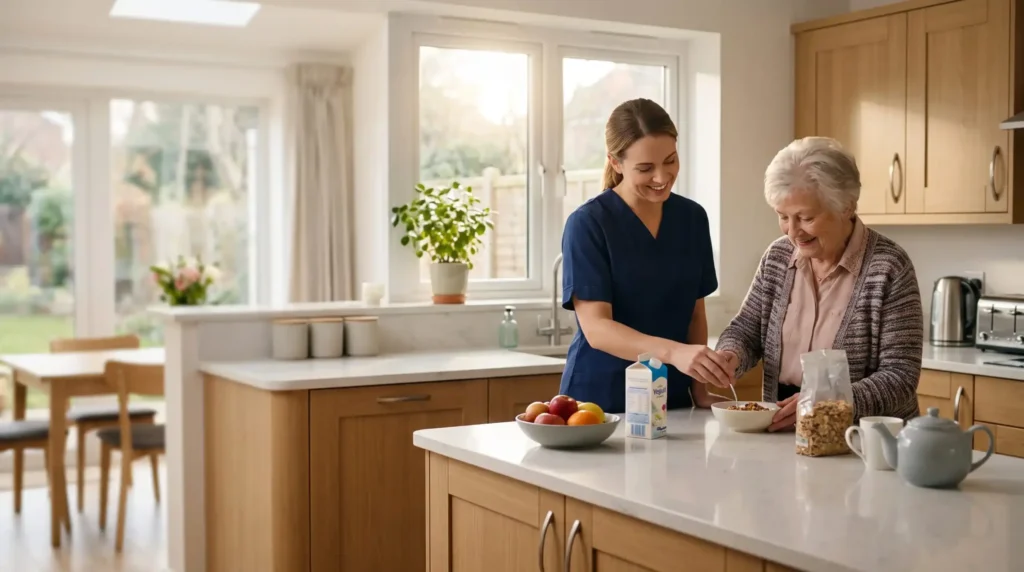
Home care, also known as domiciliary care, involves trained professionals visiting a person in their own home to provide assistance. This type of care allows individuals to remain in the familiar surroundings they love while receiving the exact level of support they require. The visits can range from a brief daily check to continuous live-in support, depending entirely on what the person needs to stay safe and healthy.
When exploring home care services in the UK, families will find a wide variety of options designed to promote independence. Caregivers can assist with basic household chores, meal preparation, and grocery shopping. They also provide essential personal maintenance, including assistance with bathing, dressing, and managing daily medications. Beyond physical tasks, these professionals offer vital companionship, helping to prevent the severe loneliness that many elderly people experience.
The most significant benefit of this option is the preservation of independence. People get to keep their beloved pets, sleep in their own beds, and maintain their established daily routines. They stay closely connected to their local community and their neighbours. It creates highly personalised plans that adapt as your loved one’s needs change over time, ensuring they always receive the perfect balance of help and freedom.
What is a Care Home?
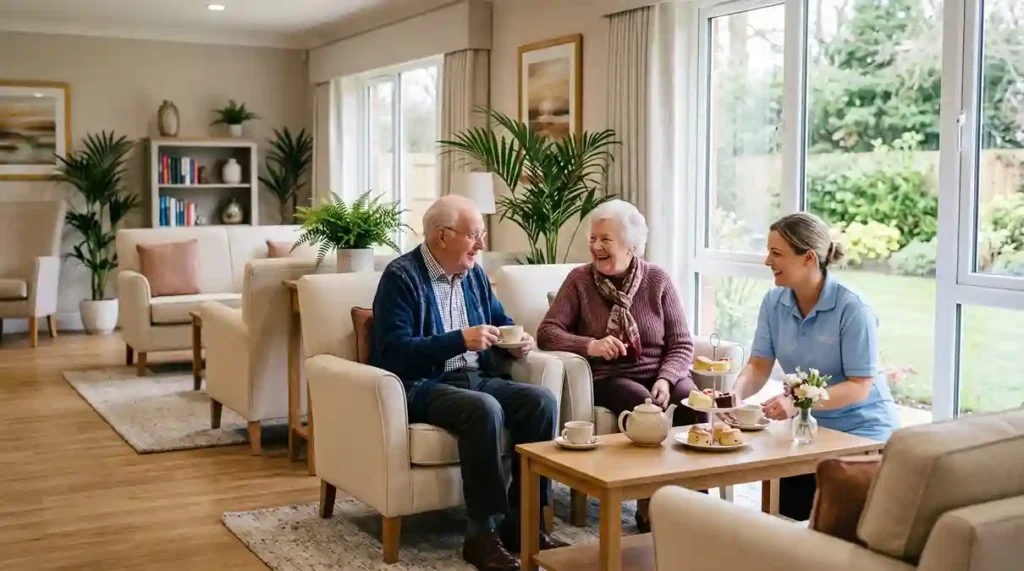
A care home is a dedicated residential facility where elderly individuals live full-time and receive round-the-clock supervision and support. To fully understand the care home meaning, it is helpful to look at the two main categories available. These are standard residential homes and specialised nursing homes.
Standard residential facilities provide a safe environment where staff members help residents with personal care, meals, and social activities. They offer a community setting where older adults can interact with peers, participate in organised group events, and enjoy a structured daily routine without the burden of maintaining a property.
Nursing homes provide a much higher level of medical intervention. These facilities employ qualified nurses who are on-site at all times. They cater to individuals with complex health conditions, severe mobility issues, or advanced illnesses that require constant clinical monitoring. People usually move into these residential settings when living alone becomes physically unsafe, or when their medical requirements exceed what family members or visiting professionals can safely manage in a domestic setting.
Difference Between Care Homes and Home Care in the UK

Understanding the difference is crucial for making an informed and confident decision. Comparing the two options side by side helps highlight which environment will best serve your loved one.
- Environment and Comfort: Home care allows the individual to stay in their own house, surrounded by their personal memories, furniture, and local community. A residential facility requires moving into a new, communal environment. While facilities strive to be comfortable, they are inherently more institutional than a private family house.
- Level of Independence: Staying at home maximises personal freedom. The individual decides when they want to wake up, what they want to eat, and how they want to spend their afternoon. In a residential facility, residents must generally adapt to the institution’s established schedules for mealtimes and activities.
- Financial Cost: Domiciliary support is often more cost-effective if the person only needs a few hours of help each day. You only pay for the specific services you use. Residential facilities require you to pay for accommodation, food, and 24-hour staffing, which usually results in a much higher fixed monthly cost.
- Emotional Wellbeing: Leaving a family home of forty years can cause significant distress, confusion, and anxiety. Receiving support at home minimises this emotional disruption. However, for individuals who suffer from extreme isolation, the bustling social environment of a residential facility might actually improve their daily mood.
- Level of Care: Visiting professionals provide excellent one-on-one attention during their scheduled hours. If a person requires constant, unpredictable medical intervention in the middle of the night, a nursing facility with permanent overnight clinical staff might be the safer choice.
Which Is Better for Elderly Care?

There is no universal answer to which option is better. The right choice shifts dramatically based on individual circumstances, health conditions, and personal preferences. What works perfectly for one family might be entirely wrong for another.
Home support is usually the better option when the individual wants to retain their freedom and has a safe domestic environment. If they only need help with morning routines, medication reminders, or light household chores, moving them into an institution is often unnecessary. Remaining in a familiar space helps people maintain their cognitive function and emotional stability. With tailored support from providers, individuals can enjoy a high quality of life on their own terms.
A residential facility becomes the better option when safety becomes a constant, unmanageable concern. If an individual has advanced medical needs, suffers from frequent severe falls, or requires specialised equipment that cannot fit into a standard house, a facility offers necessary protection. Sometimes, the physical layout of a family house simply cannot accommodate wheelchairs or hospital beds safely. In these specific cases, a dedicated facility provides the most secure environment.
Care Home Near Me – What Families Should Know
When a family reaches a crisis point, the first instinct is often to open a web browser and type care home near me into the search bar. This search intent usually signals that families are looking for an immediate, local solution to keep their relative close by. However, choosing a facility requires much more research than simply picking the closest building on a digital map.
Location is incredibly important because you want visiting to be easy for family and friends. Frequent visits keep the resident connected to their past life and prevent feelings of abandonment. However, location should not be the only deciding factor. You must deeply evaluate the quality of the services provided inside the building.
Always check the official quality ratings provided by the Care Quality Commission. Read reviews from other families to understand how the staff treats the residents. Pay close attention to the cleanliness of the environment, the quality of the food, and the overall atmosphere. Staff experience and turnover rates also matter greatly. A facility with consistent, long-term employees usually provides much better, more compassionate support than one constantly struggling to hire new workers.
Average Time in a Care Home with Dementia

Dementia completely changes the trajectory of later life care. This progressive condition slowly removes a person’s ability to live safely without constant supervision. Families dealing with this diagnosis face unique emotional hurdles and often have to make incredibly difficult choices regarding residential placement.
Many people wonder about the average time when planning for the future. The duration of a stay varies wildly depending on when the person actually moves into the facility. Some individuals move in during the very early stages of memory loss and live there comfortably for many years. Others only transition to a facility during the final, most severe stages of the illness, meaning their stay might be much shorter.
Providing dementia maintenance requires immense sensitivity, patience, and specialised training. The progression of the disease is entirely unpredictable. While estimating timeframes helps with financial planning, families should focus primarily on the quality of daily life. Whether receiving specialist dementia support at home through Sscare or living in a secure memory unit, the primary goal is always to provide dignity, comfort, and deep compassion for the individual.
Care Home Jobs in the UK
The adult support sector is one of the most vital industries in the country. A quick look at the available carehome jobs reveals a massive, growing demand for dedicated professionals. As the population ages, the need for compassionate, hardworking individuals continues to rise dramatically across the nation.
These roles vary widely. Facilities constantly hire registered nurses, healthcare assistants, activity coordinators, cooks, and cleaning staff. Each role plays a crucial part in keeping the environment safe and enjoyable for the residents. Working in this sector is highly demanding but also incredibly rewarding. It takes a special kind of person to dedicate their career to improving the lives of vulnerable older adults.
Which Later Life Care Option Is Right?

Deciding which later-life care option to choose requires an honest assessment of your current reality. You have to balance your loved one’s desires with the practical limitations of health and budget.
Begin by evaluating their current health condition. Do they need occasional help to stay independent, or do they require constant clinical supervision? Next, look closely at your budget. Domiciliary visits offer flexibility and can be scaled up or down to manage costs, whereas residential facilities require a significant, fixed financial commitment.
Finally, consider the level of family support available. If family members live nearby and can help out regularly, a visiting professional might be all that is needed to bridge the gap. Ultimately, the right choice is the one that provides the highest level of safety, maximises personal dignity, and brings your family lasting peace of mind.
Frequently Asked Questions
What is the difference between care homes and home care in the UK?
The main difference lies in the living environment. Home care involves professional caregivers visiting an individual in their own home to provide necessary support and assistance. A care home is a dedicated residential facility where an individual moves to live full-time, receiving 24-hour supervision and communal services.
Is home care better than a care home?
Home care is often preferred by individuals who wish to maintain their independence, stay in familiar surroundings, and keep their established routines. However, a residential facility might be a better and safer option for someone with highly complex medical needs or severe mobility issues that require constant, round-the-clock clinical monitoring.
What does a care home mean?
A carer home is a residential setting designed specifically for older adults or individuals with disabilities who can no longer live safely on their own. These facilities provide accommodation, daily meals, personal assistance, and social activities. Nursing homes, a specific type of care home, also provide permanent on-site medical staff.
How do I find a care home near me?
You can find local options by searching online directories, consulting with your local council’s adult social services department, or speaking with healthcare professionals. It is vital to read Care Quality Commission inspection reports, visit the facilities in person, and ask detailed questions about staff experience before making a final decision.
How long do people stay in care homes with dementia?
The duration of a stay varies greatly depending on the individual’s overall health and the specific stage of their condition upon admission. Some people live in specialised memory carer units for several years, while others who enter during the final stages of the illness may have a much shorter stay. The focus should always remain on providing the highest quality of life during their time there.
How much does home care cost in the UK?
The cost of domiciliary support depends entirely on the number of hours required and the specific type of assistance needed. Because it is highly flexible, you only pay for the exact services your loved one uses. This often makes it a much more affordable and scalable option compared to the fixed, high monthly fees associated with full-time residential facilities.