
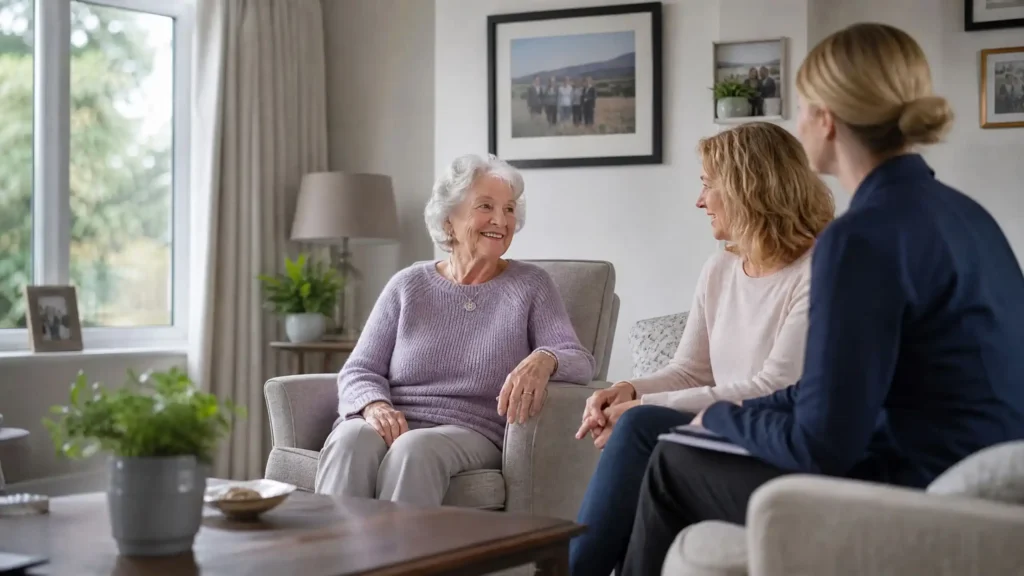
Watching a loved one grow older brings a mix of beautiful memories and new challenges. As families notice changes in mobility or memory, the conversation naturally turns to the future. Most seniors express a strong desire to stay in the house they have known for decades. This concept, often referred to as ageing in place, allows older adults to maintain their dignity, comfort, and cherished routines.
At Serene Soul Care, we understand how overwhelming this transition feels. You might have questions about costs, service types, and government funding. Our goal is to provide compassionate domiciliary support that promotes daily living, personal care, and independence at home.
This comprehensive guide will help you understand the landscape of domestic support. We will explore the industry’s exact terminology, discuss how to find reliable help, and break down the financial aspects of securing quality assistance. Whether you need an occasional friendly visitor or round-the-clock medical supervision, this post will give you the clarity you need to make informed decisions for your family.
Understanding the Basics of Home Support
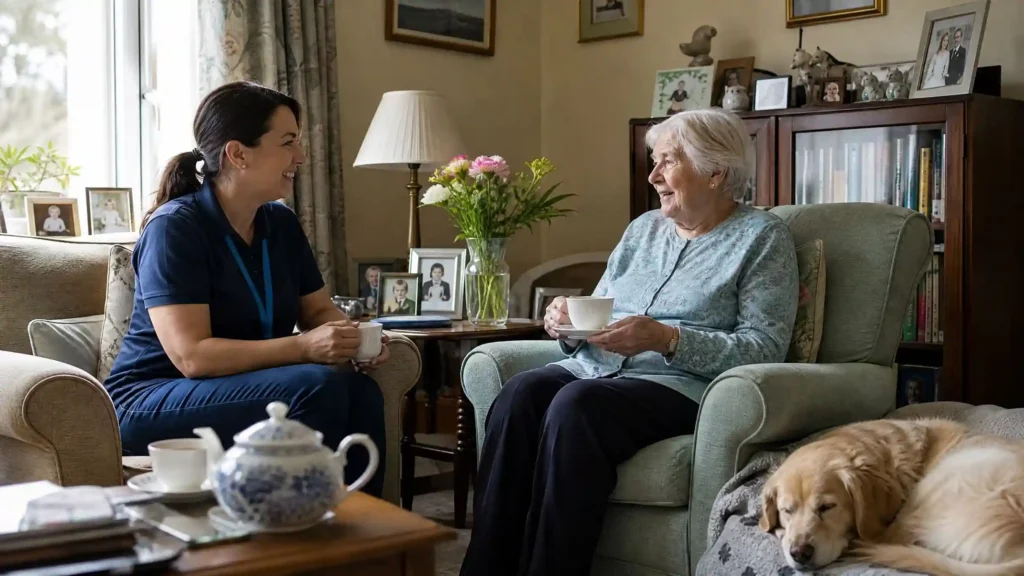
The world of senior assistance is filled with complex terms and overlapping services. Breaking down these concepts is the first step toward finding the perfect solution for your ageing parents or relatives.
What Is It Called When You Take Care Of The Elderly At Home?
Many families ask, “What is it called when you take care of the elderly at home? The terminology varies depending on where you live and the level of medical support required. Generally, this practice is known as domiciliary care, in-home care, or home health care.
When families provide this support themselves, it is simply called family caregiving. However, when you hire professionals, the terms become more specific. Domiciliary care refers to non-medical assistance. This includes help with daily living activities, personal hygiene, and household chores. Home health care, on the other hand, involves clinical services provided by registered nurses or physical therapists.
The Importance of Ageing in Place
Ageing in place is more than just a trending buzzword. It is a fundamental philosophy that respects the emotional attachment people have to their personal spaces. Moving to a residential facility often causes severe distress and confusion, particularly for individuals living with dementia.
Here are the main benefits of ageing in place:
- Familiar surroundings reduce anxiety and promote mental well-being.
- Seniors keep their beloved pets by their side.
- Daily routines remain uninterrupted.
- Clients sleep in their own beds and use their own furniture.
- Family members can visit freely without strict facility visiting hours.
By bringing professional support directly into the living room, you bridge the gap between safety and comfort. A compassionate carer acts as a safety net, allowing the senior to enjoy their home without the constant fear of falling or forgetting vital medications.
Exploring Your Options for Daily Assistance

Every family has a unique schedule and specific medical requirements. Understanding the broad spectrum of available services ensures you do not pay for more help than you actually need, while still keeping your loved one entirely safe.
Elderly Care Services At Home
When looking into elderly care services at home, you will find a wide variety of options designed to fit different stages of ageing. The goal is always to provide just enough support to ensure safety while maximising personal independence.
These services typically fall into a few main categories:
- Personal Care: Assistance with highly sensitive tasks. This includes bathing, showering, dressing, and using the toilet. Our carers handle these tasks with the utmost respect and dignity.
- Domestic Support: Help maintain a clean, safe living environment. Carers assist with laundry, vacuuming, washing dishes, and changing bed linens.
- Nutritional Support: Ensuring the client eats healthy meals. Carers plan menus, shop for groceries, and prepare fresh food daily.
- Companionship: Combatting the severe loneliness that often accompanies old age. Carers share cups of tea, play board games, and engage in meaningful conversations.
- Mobility Assistance: Helping clients move safely from the bed to the wheelchair or accompanying them on short walks around the neighbourhood.
Finding In-Home Care Services For Seniors Near Me
Location plays a massive role in the reliability of your support network. When you search for in-home care services for seniors near you, you want an agency with a strong local presence. Local providers understand the specific community resources available, know the best local pharmacies, and can respond quickly to sudden emergencies.
Choosing a nearby agency offers several distinct advantages:
- Carers spend less time commuting and more time actively helping.
- Local agencies often have strong relationships with neighbourhood doctors and community centres.
- Emergency response times are drastically reduced.
- It is easier for families to visit the agency office for face-to-face meetings.
To find the best local options, start by reading online reviews and asking your general practitioner for recommendations. Look for agencies that proudly display their certifications and have a clear, transparent process for hiring and training their staff.
Financing and Support Programmes

The financial aspect of securing professional help is often the biggest hurdle for families. The costs can seem intimidating at first glance, but there are numerous pathways to securing the funds necessary to keep your loved one safe.
Is There Free In-Home Help For Seniors?
Many worried families search the internet, wondering if there is any free in-home help for seniors. The answer is complicated. Entirely free, comprehensive, around-the-clock professional care is incredibly rare. However, there are numerous programmes, charities, and community initiatives that provide free or heavily subsidised assistance for specific needs.
For example, local community centres often organise free volunteer programmes where neighbours check in on elderly residents. Some charities offer free respite services for a few hours a week, giving family carers a desperately needed break. Additionally, local councils sometimes provide free home modifications, such as installing bathroom grab bars or outdoor ramps, to prevent dangerous falls.
While these free services are incredibly valuable, they usually do not replace the need for consistent, daily professional support. They work best as supplementary resources alongside a formal domiciliary care plan.
Accessing Elderly Care Assistance From The Government
To bridge the financial gap, many families turn to formal government channels. Securing government assistance for elderly care requires navigating a formal assessment process. In the UK, this begins with a needs assessment conducted by your local council.
During this assessment, a social worker will visit the home to evaluate how the senior manages daily tasks. They will look at mobility, hygiene, and overall safety. If the council determines that the individual has eligible care needs, they will conduct a financial assessment to determine how much the government will pay for those services.
Government assistance can take several forms:
- Direct Payments: The council provides the family with a specific budget to hire an agency of their choice.
- Council Arranged Services: The local authority arranges and pays the care providers directly..
- Attendance Allowance: A specific benefit for older adults who need help with personal care due to illness or disability.
- Carer’s Allowance: Financial support for family members who spend a significant portion of their week caring for a relative.
Understanding these benefits is crucial. We highly recommend speaking with a financial advisor or a local charity specialising in elderly rights to ensure you claim all the support your family is legally entitled to.
Moving to Specialised and Continuous Support
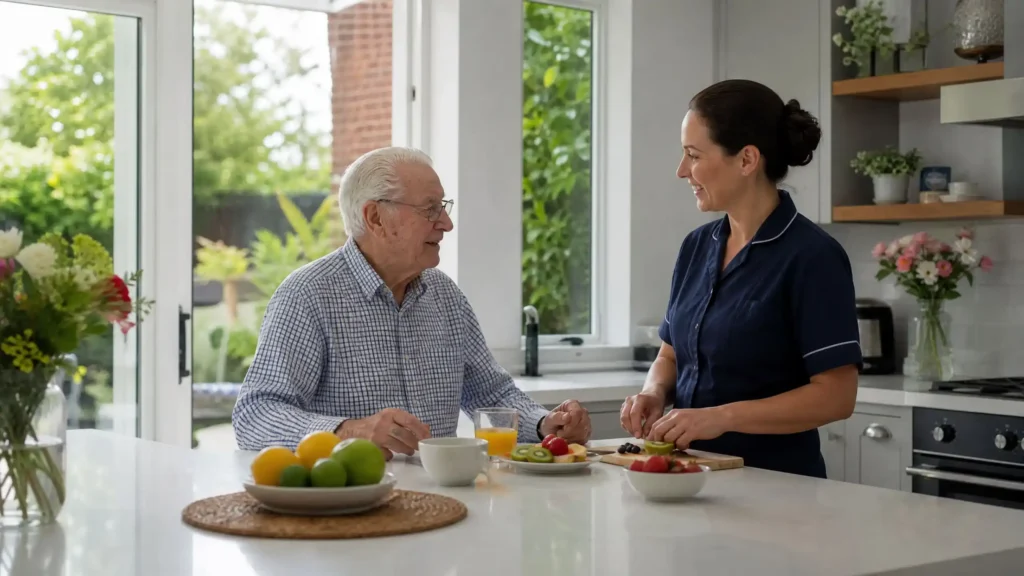
As medical conditions progress, a few hours of help a day might no longer be enough. Families must adapt their strategies to provide more robust, continuous safety nets.
Opting For Private Care For The Elderly At Home
When government funding falls short, or families want highly specific services not covered by local councils, they turn to the private sector. Choosing private care for the elderly at home gives families total control over the entire process. You get to decide exactly who enters the house, what hours they work, and what specific tasks they perform.
Private domiciliary support offers incredible flexibility. You might start by having a Carer visit for just one hour each morning to help your mother get dressed. As her needs change over the years, you can easily increase those hours. Private agencies do not require you to wait for lengthy government reassessments to change the care plan.
Furthermore, private agencies often provide highly specialised support for complex conditions like Alzheimer’s disease or Parkinson’s. Carers receive specific training to manage the behavioural changes and safety risks associated with these diseases. This level of customised, responsive service is the hallmark of Serene Soul Care.
How To Get 24-Hour Care For The Elderly At Home
There often comes a time when an older adult cannot be safely left alone at any time of the day or night. Families frequently ask us how to get 24-hour care for the elderly at home. This high level of support is completely possible and prevents the need for a nursing home admission.
There are two primary ways to set up continuous coverage:
- Shift Work: A team of carers rotates throughout the day and night. Typically, this involves two or three different professionals working eight or twelve-hour shifts. This ensures that a carer is always wide awake and ready to assist at three in the morning if the client needs to use the bathroom or becomes disoriented.
- Live In Care: A dedicated carer physically moves into the client’s home. They require their own private bedroom and scheduled breaks. While they sleep at night, they are present in the house and can wake up for emergencies. This option is often more affordable than hourly shift work and provides fantastic continuity of companionship.
To set this up, you must partner with a highly reputable agency. The agency will assess the home to ensure it can accommodate a live-in worker or coordinate the complex logistics of managing multiple shift workers.
Understanding the Costs in Your Area

Budgeting for long-term assistance requires clear, transparent information about local pricing structures. Prices vary wildly depending on your region and the specific medical qualifications of the staff you hire.
Evaluating Home Nursing Services Charges in Manchester
If you live in the northern parts of the country, you must consider regional data when planning your budget. For example, understanding the charges for home nursing services in Manchester helps families anticipate monthly expenses.
General domiciliary care, which focuses on personal hygiene and companionship, usually charges an hourly rate. This rate covers the Carer’s wages, travel time, and the agency’s administrative support. However, if your loved one requires actual nursing services like wound dressing, catheter management, or complex medication administration, the costs will be significantly higher.
Registered nurses command higher hourly rates due to their advanced clinical training. When planning your budget, it is vital to separate the costs of general daily living support from strictly medical nursing visits. Many families use a cost-effective blend of both. They hire a standard domiciliary carer for eight hours a day to handle meals and hygiene and arrange for a registered nurse to visit just twice a week for medical checks.
Always ask agencies for a totally transparent fee schedule before signing any agreements. A trustworthy agency will provide a clear breakdown of weekday, weekend, and bank holiday rates so you are never surprised by an invoice.
The Serene Soul Care Difference

At Serene Soul Care, we believe that bringing a stranger into your home is a massive leap of trust. We honour that trust by providing highly vetted, compassionate professionals who view their work as a calling, not just a job.
Tailored Care Plans for Independence
We do not believe in one-size-fits-all solutions. Every individual has a rich history, unique preferences, and specific physical limitations. Our process begins with a thorough consultation. We sit down with the family and the client to discuss everything from medical history to favourite television shows and preferred meal times.
This information serves as the basis for a tailored care plan. If your father loves to read the morning newspaper but struggles with his vision, our carer will read it aloud to him while he eats breakfast. By focusing on these small, highly personalised details, we preserve the client’s dignity and actively promote their ongoing independence. We encourage our clients to do everything they safely can, stepping in only when assistance is truly needed.
Companionship and Respite Support
Loneliness is one of the greatest threats to the health of older adults. It leads to depression, cognitive decline, and physical deterioration. Our Carers are chosen specifically for their warm, engaging personalities. They are there to share stories, listen to memories, and provide a genuine human connection.
Furthermore, we recognise the incredible burden placed the family carer. You cannot pour from an empty cup. Our respite services allow family members to take a step back. Whether you need a few hours to run errands or a full two weeks to take a much-needed holiday, our team steps in seamlessly. You can relax knowing your loved one is receiving top-tier, compassionate support.
Conclusion
Navigating the landscape of senior support is undoubtedly complex. From understanding the difference between medical nursing and domiciliary help to exploring government funding and private options, there is a lot of information to process. However, the ultimate goal remains entirely simple: keeping your loved ones safe, happy, and comfortable in the home they cherish.
By educating yourself on the available services, you empower your family to make the best possible choices. You do not have to walk this path alone. Agencies exist precisely to lift this heavy burden from your shoulders and provide professional, reliable solutions.
Frequently Asked Questions
A professional agency always has a robust backup plan in place. If your primary carer is unavailable due to illness or scheduled leave, we will coordinate a fully trained replacement. We aim to introduce a substitute carer in advance whenever possible, ensuring your loved one always sees a familiar face and experiences no disruption to their daily routine.
The domiciliary carer cannot prescribe medication or administer injections. However, they provide vital support for medication management. They can remind your loved ones to take their pills at the right times, help open difficult packaging, and ensure medications are taken with food or water as directed by a doctor.
Most reputable domiciliary agencies offer highly flexible arrangements. While there is usually a basic service agreement outlining the rules and rates, you are rarely locked into a rigid, multi-year contract. You can typically adjust the number of hours you receive or cancel the service entirely with reasonable notice.
Safety is our absolute highest priority. Every Carer undergoes a rigorous vetting process before they ever set foot in a client’s home. This includes comprehensive background checks, criminal record screenings, and detailed reference verifications. Furthermore, our staff undergoes ongoing training in health, safety, and compassionate care.
Absolutely. Flexibility is a core component of effective domiciliary support. As medical conditions change or mobility decreases, we conduct a rapid reassessment of the client’s needs. We can easily increase visiting hours, transition to overnight support, or add new specific tasks to the daily routine to ensure the client remains totally safe at home.